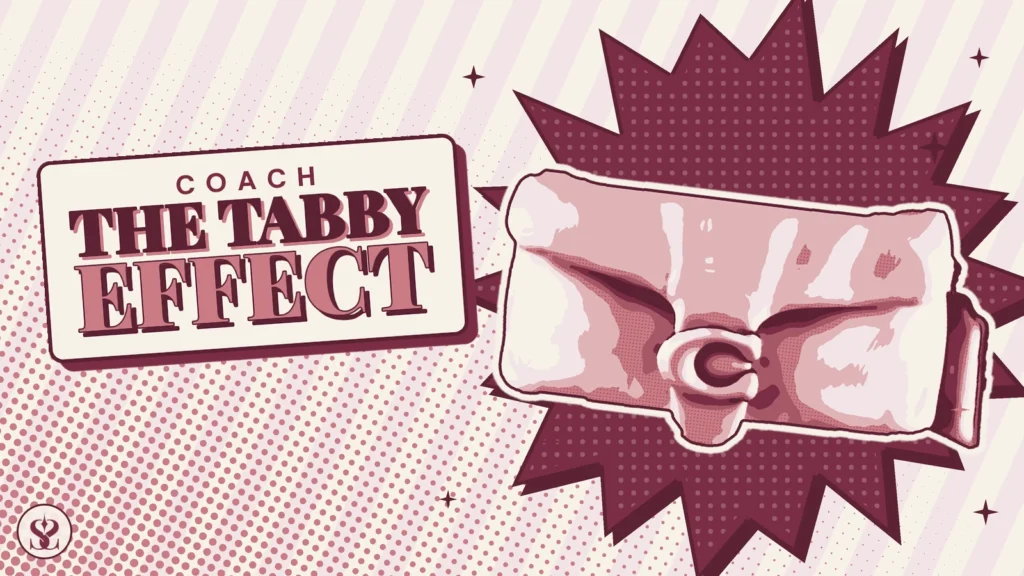
The Coach Tabby effect helped drive 24% revenue growth for the 85-year-old brand in fiscal year (FY) 2026. Coach’s revenue rose to $6.91 billion in the fiscal year that ended on June 27, 2026, noted the brand’s parent company, Tapestry Inc.
So what is the Coach Tabby Effect? It’s what happens when one hit bag pulls new, younger shoppers into a brand. Those shoppers pay closer to full price, come back for more, and help the whole label sell for more.
The Tabby debuted in late 2019. Partway through the pandemic, its sales started to slip, and Coach almost gave up on it. Instead, Tapestry’s data showed younger shoppers were gravitating to the bag. Coach kept it and released a softer Pillow Tabby in 2021.
“In a normal cycle, we would have said: ‘Let’s mark it down and bring in the next new thing.'”
– Tapestry CEO Joanne Crevoiserat

How the Coach Tabby won over younger shoppers
Coach’s data team found the Tabby was bringing in lots of young shoppers who went on to spend more with the brand over time. So Coach treated the bag like a franchise. It added new sizes, including some at entry-level prices, and made the Tabby the star of campaigns like “In My Tabby” in 2023.
That playbook is still working. Tapestry welcomed about 11 million new customers across its brands in fiscal 2026, and about 35% of them were Gen Z. Nearly 9 million of those new customers came to Coach.
Executives said Coach’s New York family of bags, including the Brooklyn, Empire, and Chelsea, drove strong Gen Z customer acquisition along with the Tabby and Teri families. Crevoiserat said these younger shoppers pay higher prices on average, stay loyal to the brand longer, and influence what shoppers of other generations buy.
The Coach Tabby Effect
The Tabby didn’t just increase Coach’s bag sales. Coach sold bags at higher prices. That’s the Tabby Effect.
In the 2025 holiday quarter, affluent Gen Z shoppers were snapping up Tabby bags priced between $295 and $725 at the time. Coach’s revenue jumped 25% to $2.14 billion that quarter, and Tapestry raised its forecasts. Shoppers accepted the higher prices and still bought more Coach products.
For the full fiscal year, the average price a Coach handbag actually sold at, which the company calls average unit retail, rose by a mid-teens percentage. The number of handbags Coach sold rose at a low-double-digit rate too.
Fewer sales events helped. “We had fewer promotion days in the fourth quarter,” Coach CEO and Brand President Todd Kahn said during Tapestry’s August earnings call. Coach also sells full-price collection bags in its outlet stores.
What the Coach Tabby effect means for Tapestry
Coach is now most of Tapestry. The brand brought in $6.91 billion of Tapestry’s $7.99 billion in revenue excluding Stuart Weitzman, a brand Tapestry sold in 2025. Kate Spade, Tapestry’s other brand, saw revenue fall 10% to $1.07 billion.
Tapestry expects Coach to grow at a high-single-digit rate in fiscal 2027 and to keep its operating margin near 36%. Tapestry doesn’t report Tabby sales on their own, but Kahn said the bag still has room to grow.
“We have a lot of runway to continue to evolve Tabby, and we have not seen any slowdown in Tabby.”
– Todd Kahn, Coach CEO and Brand President
Tapestry reports its next quarterly results on Thursday, Nov. 5.
Sources: Tapestry, Tapestry earnings call, Reuters, Fortune, The Business of Fashion
Money Lesson
Growth that doesn’t need a sale
A company can grow revenue in two ways. It can sell more things, or it can sell things for more. Coach did both in fiscal 2026, and it did it with fewer promotion days. That ability to raise prices without losing shoppers is called pricing power, and it’s one of the first things investors look for in a brand. A company that leans on discounts to hit its sales goals usually gives up profit to get there. When a brand you love reports results, check three numbers. Look at how many units it sold, what it charged on average, and what happened to its profit margin. Growth that shows up in all three is the real thing.
Numbers were accurate when we hit publish, but markets move fast. Nothing here is a recommendation to buy or sell any stock. Please talk to a licensed financial professional before you invest.



Pingback: Why Coach Bags Are Crushing Kate Spade Sales Right Now