Terms to Know
- Annual percentage rate (APR): The yearly interest rate charged on any balance you leave unpaid.
- FICO Score: A common credit score lenders use to judge how likely you are to repay a loan.
- Credit utilization: How much of your credit limit you’re using. If your limit is $1,000 and you owe $300, your utilization is 30%.
- Grace period: The time between the end of your billing cycle and your payment due date.
- Secured card: A card backed by a cash deposit, which usually sets your spending limit.
- Balance transfer: Moving debt from one card to another, usually to get a lower rate.
- Introductory APR: A low or 0% rate that lasts only for a set time.
- Cash advance: Cash you take out against your credit card limit, often at an ATM.
A credit card can be one of the handiest money tools in your wallet. Used with care, it builds your credit, protects your purchases, and can even pay you back in rewards. These credit card finance habits only work when you pay the full statement by the due date, though.
The average APR for card accounts charged interest was about 22.36% in the third quarter of 2026. That cost is why every habit below depends on paying in full.

Credit Card Finance Habits That Help You
Pay on Time to Build Your Credit Score
A card you pay on time becomes a record lenders can see. Payment history makes up 35% of a FICO Score. Amounts owed, which include your credit utilization, make up another 30%.
A stronger score can help you in several ways. Lenders may offer you a lower rate on a car loan or mortgage. Landlords often check your credit before they approve a rental. Your credit history can also affect what you pay for car or home insurance.
Mortgages show just how big that difference can get. In one FICO example based on rates from Aug. 19, 2025, a borrower with a score of 760 to 850 paid about $1,654 a month on a $250,000, 30-year fixed mortgage. A borrower with a score of 620 to 639 paid about $1,823 a month on the same loan. That’s $169 more every month and about $60,980 more in interest over 30 years.
When you pay on time, a secured card can help you start a credit history. Keeping an older account open can support the length of your credit history, which makes up 15% of a FICO Score.
Pay in Full to Skip Interest
Most cards give you a grace period on purchases. If you pay the full statement balance by the due date, you usually owe no interest on those purchases. That gives you a few weeks between buying something and paying for it, at no extra cost. Leave a balance, and interest can apply right away to the unpaid amount and to new purchases.
Lean on Your Card’s Protections
A credit card also protects you when something goes wrong. If someone uses a lost or stolen card before you report it, federal law caps unauthorized charges at $50, and many issuers cover the full amount. If a charge on your bill is wrong, you can dispute it in writing within 60 days of that statement.
Some cards add purchase protection or extra warranty time. Those extras vary, so check your card’s benefits guide.
Earn Rewards on Spending You Already Planned
Rewards help most when they come from spending already in your budget, such as groceries and regular bills. Put that cash back toward debt or savings.
Use a Balance Transfer to Pay Down Debt
Moving debt to a card with a 0% introductory APR can help you pay it down faster. Watch for two catches. First, some issuers charge a one-time fee of 3% to 5% of the amount you move. On a $1,000 transfer, that’s $30 to $50. Second, the 0% rate ends after a set time, so aim to clear the transferred balance before it expires. New purchases on that card may start accruing interest right away unless you pay off the entire balance, including the transferred amount, by the due date.
When a Credit Card Works Against You
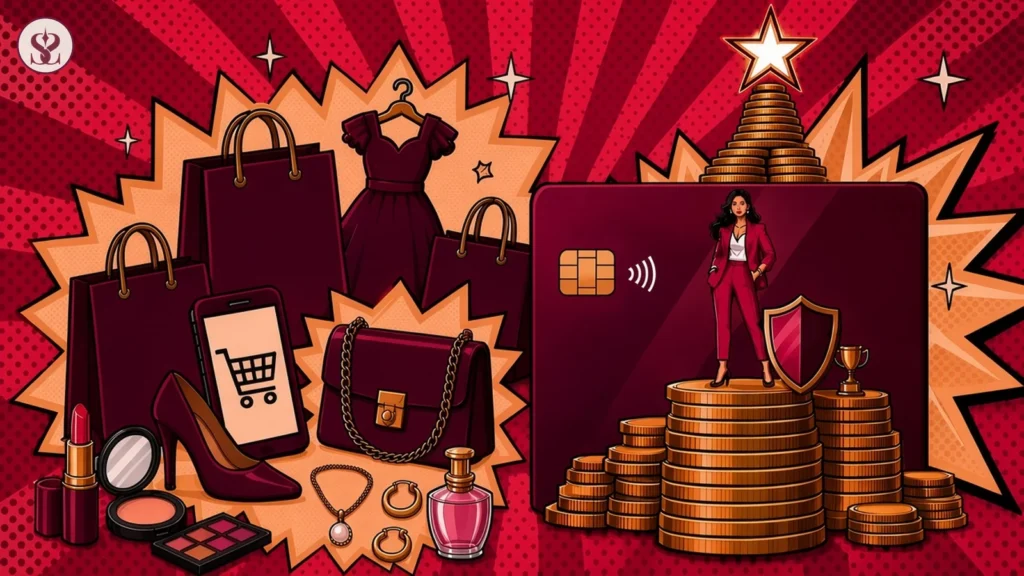
The same card works against you when you carry a balance, take a cash advance, or max out your limit. A cash advance usually starts charging interest that day, often at a higher rate than purchases, plus a fee.
Budget for rent, bills, and existing debt payments before anything else. Charging a bill to your card makes sense only when you can pay the full statement by the due date. If you can’t, pay that bill straight from your bank account. Skip extra purchases made only for rewards.
Sources: Federal Reserve G.19, myFICO, Consumer Financial Protection Bureau
Money Lesson
The advantage of a credit card is a few weeks of interest-free, protected spending, plus a stronger credit record you can use later. Those gains hold only when you pay the statement in full.
Do the math. Say you earn 2% cash back on a $500 purchase. That’s $10 in your pocket. Meanwhile, one month of interest at 22.36% takes about $9.32 out of your pocket. If you pay off that $500 purchase over 12 months at 22.36% interest, you pay about $63 more for the item. Pay rent, bills, and debt first. If you can’t pay your credit card’s full statement by the due date each month, leave the card in your wallet until that statement is fully paid.
Think of us as your money-savvy best friend, not your financial adviser. This story is for information and fun, not personal advice, so talk to a licensed professional before you make any big money moves.